Science · 2 min read
GHK-Cu, explained: why the best copper serum is blue
Few skincare ingredients have a story as long — or a colour as distinctive — as GHK-Cu. Three amino acids, one copper ion, and fifty years of research have turned it into the most talked-about peptide in skincare. Here is what you actually need to know.
Three amino acids and a copper ion
GHK stands for glycine–histidine–lysine. It was first identified in human plasma in 1973, and researchers soon discovered it binds copper with remarkable affinity. That copper-bound form, GHK-Cu (INCI: Copper Tripeptide-1), is what you find in skincare. Our levels of it naturally decline with age, which is part of why it attracted so much interest.
Why the colour matters
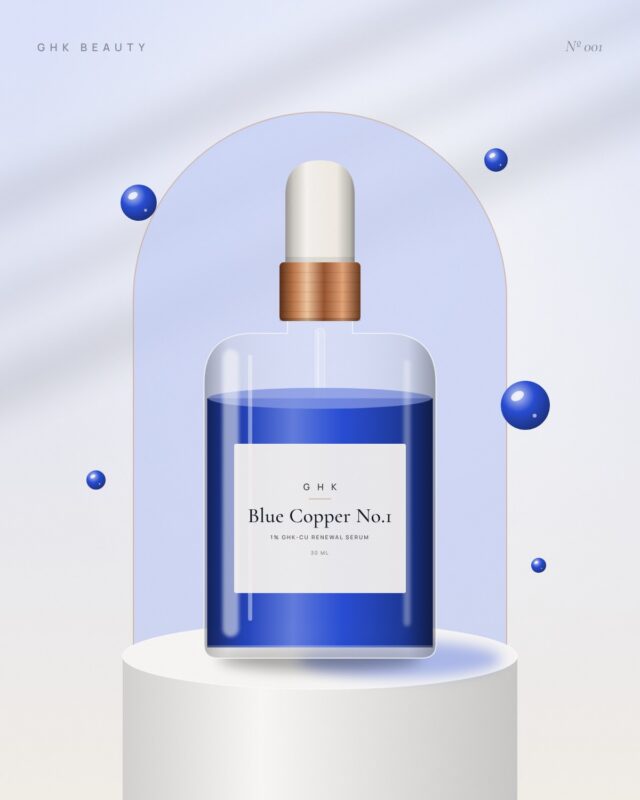
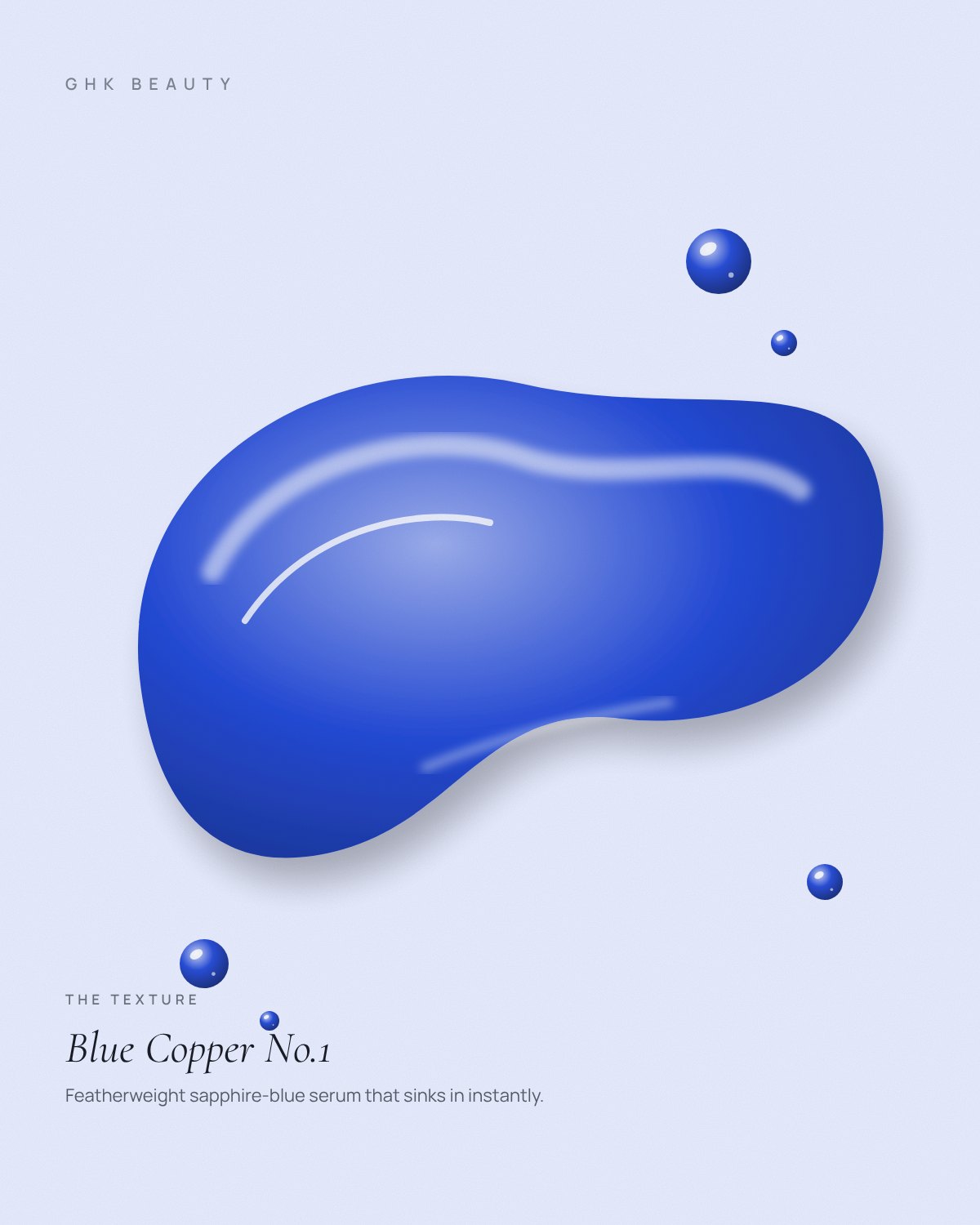
Pure GHK-Cu dissolved in water is a vivid, saturated blue. A pale or colourless “copper peptide” serum usually contains very little of it. Blue Copper No.1 is a deep sapphire because it carries a full 1% — no colourants required.
How it works on skin
GHK-Cu is a signal and carrier peptide: it delivers copper and acts as a messenger that encourages skin to support its own firmness, renewal and barrier processes. In practice that shows up as skin that looks firmer, smoother and more resilient with consistent use.
How to use it well
- Apply to damp skin after toner and essence.
- Alternate with strong acids and L-ascorbic acid (AM/PM) rather than layering them.
- Be consistent: texture changes show at 2–4 weeks, firmness at 8–12.
Ready to see the blue for yourself? Start with Blue Copper No.1.